 An official website of the United States Government
Official websites use .gov
A .gov website belongs to an official government organization in the United States.

A .gov website belongs to an official government organization in the United States.

A lock or https:// means you’ve safely connected to the .gov website. Share sensitive information only on official, secure websites
 |
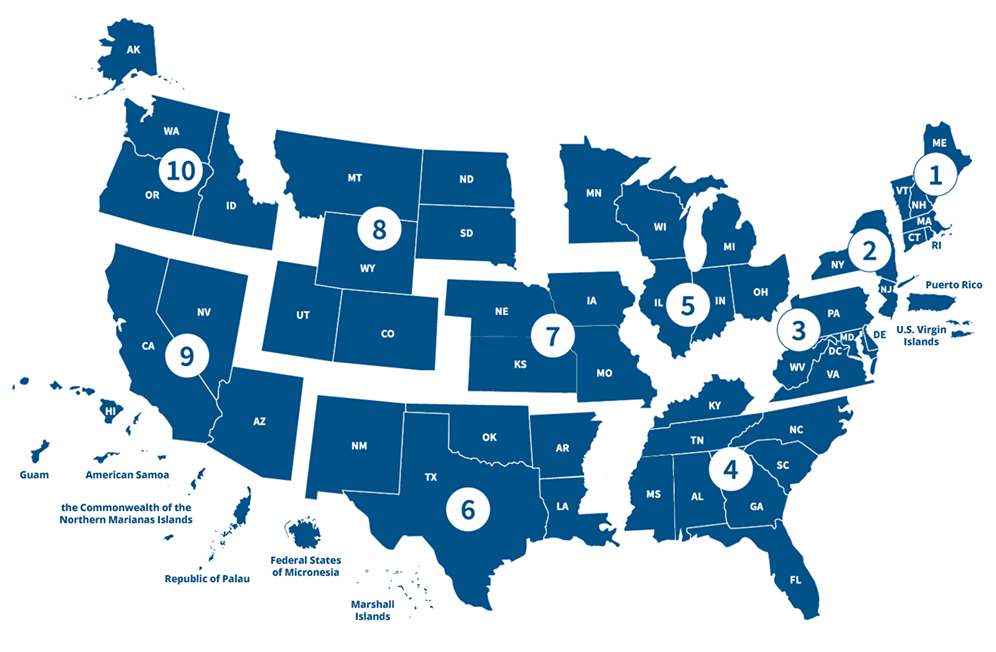
Main office contact information for HHS and FEMA by region as well as state-level health departments, emergency medical services, emergency management, fire, and law enforcement agencies.
Industrial hygienists and toxicologists are experts available to help with preparedness. They can help with planning and training. Additionally, they may be helpful as consultation resources during extended emergency responses.
An industrial hygienist is a trained professional who identifies, evaluates, and controls workplace hazards that can cause illness, injury, or discomfort. Their expertise in occupational and environmental health makes them vital in responding to natural disasters, chemical, biological, radiological incidents, and terrorism events. They support risk identification and control across the phases of an incident. Below are possible roles that an industrial hygienist may have:
A toxicologist is a scientific expert who studies the effects of chemicals, substances, and other agents on living organisms, particularly humans. They assess the toxicity, dose-response relationships, and health risks associated with exposure to hazardous materials. Toxicologists play a critical role in identifying harmful substances, setting exposure limits, and guiding medical and public health responses during chemical emergencies, product safety evaluations, and environmental contamination incidents. Below are possible roles that a toxicologist may have:
Law Enforcement personnel will be involved in chemical incidents to maintain security, ensure public safety, and investigate potential crimes. Although many EMS and other medical personnel will not be required to participate in Law Enforcement roles, useful reminders are presented below to maintain awareness of crime scene investigation considerations. The intent is to minimize adverse impacts on Law Enforcement roles.
AEGLs are established by the EPA to indicate specific airborne concentrations of chemicals at which adverse health effects may occur during short exposure durations. AEGLs are calculated for 10 minute, 30 minute, 1 hour, 4 hour, and 8 hour periods. There are three AEGL levels, above which the general population, including susceptible individuals, may experience:
More information: EPA Acute Exposure Guideline Levels for Airborne Chemicals.
AEGLs by chemical are listed in the EPA CAMEO Chemicals website and CAMEO Chemicals mobile app.
IDLH values are established by NIOSH to indicate airborne concentrations of chemicals that are likely to cause death or immediate or delayed permanent adverse health effects or prevent escape from such an environment.
IDLH values by chemical are listed in the NIOSH Pocket Guide to Chemical Hazards website or mobile app and the EPA CAMEO Chemicals website, or mobile app.
STELs are established by ACGIH and OSHA to indicate time-weighted average exposure concentration that is likely to cause adverse heath effects for exposure durations greater than 15 minutes.
For more information visit: ACGIH.org TLV Chemical Substances
Industrial Hygienists
Toxicologist