 An official website of the United States Government
Official websites use .gov
A .gov website belongs to an official government organization in the United States.

A .gov website belongs to an official government organization in the United States.

A lock or https:// means you’ve safely connected to the .gov website. Share sensitive information only on official, secure websites
 |
If you know the patient's symptoms, use CHEMM-CSI to get detailed care guidance. The Placards and Labels resource provides general health effect information for the associated category, which may be useful in the early stages of a response if patient signs and symptoms, a chemical names, or numbers are not yet known. For more specific patient care information, use CHEMM-CSI or search by chemical name or number.
Select a system
 DOT Placards
The U.S. Department of Transportation (DOT) regulations generally require placards/labels for certain Hazardous Materials (HazMats) shipped in commerce. Responders should be alerted to the possible presence of HazMats when a vehicle, railcar, or vessel displays a placard. HazMat containers may also display the 4-digit United Nations (UN) or North American (NA) number on or near the placard. However, do not rely on the presence of placards to indicate the presence of HazMats.
If 4-digit UN number is available, use the DOT 2024 ERG to find chemical-specific information or use the DOT ERG app.
For placards only, select the placard background color to help narrow your search, or select to search all placards
Select a color or graphic for more information
If 4-digit UN number is available, use the DOT 2024 ERG to find chemical-specific information or use the DOT ERG app.
Select the placard group for Primary Health Hazard information
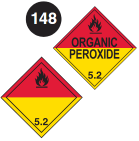
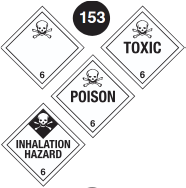
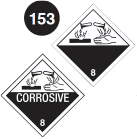
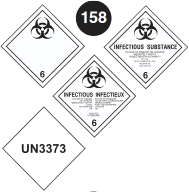
If 4-digit UN number is available, use the DOT 2024 ERG to find chemical-specific information or use the DOT ERG app.
Select the placard group for Primary Health Hazard information
If 4-digit UN number is available, use the DOT 2024 ERG to find chemical-specific information or use the DOT ERG app.
Select the placard group for Primary Health Hazard information
If 4-digit UN number is available, use the DOT 2024 ERG to find chemical-specific information or use the DOT ERG app.
Select the placard group for Primary Health Hazard information
If 4-digit UN number is available, use the DOT 2024 ERG to find chemical-specific information or use the DOT ERG app .
Select the placard group for Primary Health Hazard information
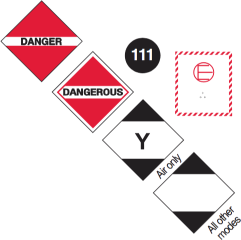
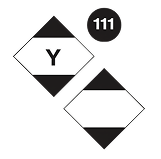
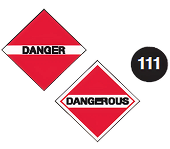
Mixed Load / Unidentified Cargo
ERG Guide 111, Page 155
Primary Health Hazards
Select the guide number to go to the DOT 2024 ERG Orange Guide Page for additional information on:
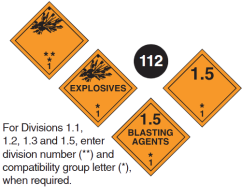
Explosives – Division
1.1 Mass Explosion Hazard
1.2 Projection Hazard
1.3 Fire, Minor Blast Hazard, or Both or
1.5 Insensitive Explosives with Mass Explosion Hazard
ERG Guide 112, Page 156
Primary Health Hazards
Select the guide number to go to the DOT 2024 ERG Orange Guide Page for additional information on:
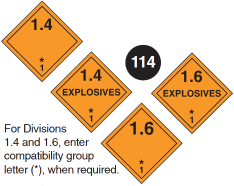
Explosives – Division
1.4 No Significant Hazard or
1.6 Extremely Insensitive Articles No Explosion
ERG Guide 114, Page 160
Primary Health Hazards
Select the guide number to go to the DOT 2024 ERG Orange Guide Page for additional information on:
Gases – Flammable – Corrosive
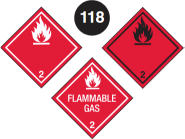
ERG Guide 118, Page 168
Primary Health Hazards
Select the guide number to go to the DOT 2024 ERG Orange Guide Page for additional information on:
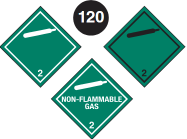
Gases – Inert
ERG Guide 120, Page 172
Primary Health Hazards
Select the guide number to go to the DOT 2024 ERG Orange Guide Page for additional information on:
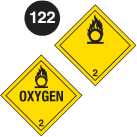
Gases – Oxidizing (including Refrigerated Liquids)
ERG Guide 122, Page 176
Primary Health Hazards
Select the guide number to go to the DOT 2024 ERG Orange Guide Page for additional information on:
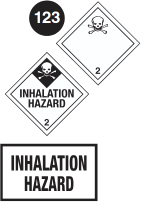
Gases – Toxic
ERG Guide 123, Page 178
Primary Health Hazards
Select the guide number to go to the DOT 2024 ERG Orange Guide Page for additional information on:
Gases – Toxic and/or Corrosive
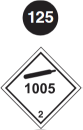
ERG Guide 125, Page 182
Primary Health Hazards
Select the guide number to go to the DOT 2024 ERG Orange Guide Page for additional information on:
Flammable Liquids (Water-Miscible)
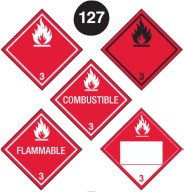
ERG Guide 127, Page 186
Primary Health Hazards
Select the guide number to go to the DOT 2024 ERG Orange Guide Page for additional information on:
Flammable Liquids (Water-Miscible)
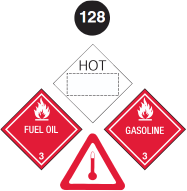
ERG Guide 128, Page 188
Primary Health Hazards
Select the guide number to go to the DOT 2024 ERG Orange Guide Page for additional information on:
Flammable Solids – Toxic and/or Corrosive
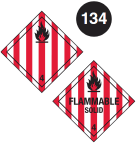
ERG Guide 134, Page 200
Primary Health Hazards
Select the guide number to go to the DOT 2024 ERG Orange Guide Page for additional information on:
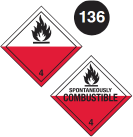
Substances – Spontaneously Combustible – Toxic and/or Corrosive (Air Reactive)
ERG Guide 136, Page 204
Primary Health Hazards
Select the guide number to go to the DOT 2024 ERG Orange Guide Page for additional information on:
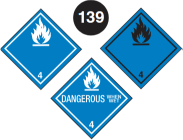
Substances – Water-Reactive (Emitting Flammable and Toxic Gases)
ERG Guide 139, Page 210
Primary Health Hazards
Select the guide number to go to the DOT 2024 ERG Orange Guide Page for additional information on:
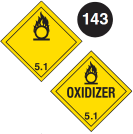
Oxidizers (Unstable)
ERG Guide 143, Page 218
Primary Health Hazards
Select the guide number to go to the DOT 2024 ERG Orange Guide Page for additional information on:
Organic Peroxides (Heat and Contamination-Sensitive/Temperature-Controlled)
ERG Guide 148, Page 228
Primary Health Hazards
Select the guide number to go to the DOT 2024 ERG Orange Guide Page for additional information on:
Substances – Toxic and/or Corrosive (Combustible)
ERG Guide 153, Page 238
Primary Health Hazards
Select the guide number to go to the DOT 2024 ERG Orange Guide Page for additional information on:
Infectious Substances
ERG Guide 158, Page 248
Primary Health Hazards
Select the guide number to go to the DOT 2024 ERG Orange Guide Page for additional information on:
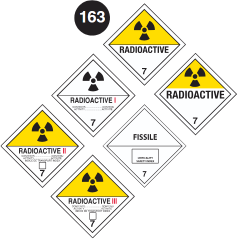
Radioactive Materials (Low- to High-Level Radiation)
ERG Guide 163, Page 258
Primary Health Hazards
Select the guide number to go to the DOT 2024 ERG Orange Guide Page for additional information on:
Substances – Water-Reactive (Emitting Flammable Gases)
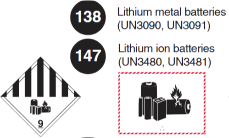
ERG Guide 138, Page 208
Primary Health Hazards
Lithium-Ion and Sodium-Ion Batteries
ERG Guide 147, Page 226
Primary Health Hazards
Select the guide number to go to the DOT 2024 ERG Orange Guide Page for additional information on:
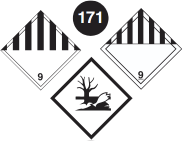
Radioactive Materials (Low- to High-Level Radiation)
ERG Guide 171, Page 274
Primary Health Hazards
Select the guide number to go to the DOT 2024 ERG Orange Guide Page for additional information on:
 GHS Labels
The United Nations developed the Globally Harmonized System (GHS) to bring into agreement the chemical regulations and standards of different countries. Individual containers of hazardous chemicals and safety data sheets are required to have GHS labels that include a signal word, hazard statement, precautionary statements, product identifier, and supplier identification.
See the DOT 2024 ERG, Page 18 for more information.
Select an icon for more information
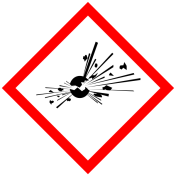
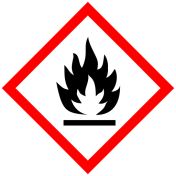
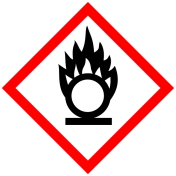
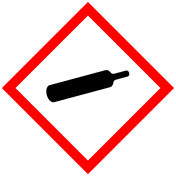
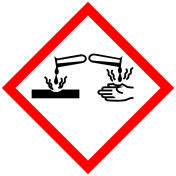
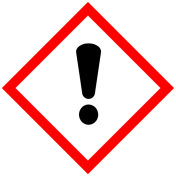
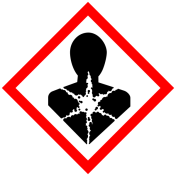
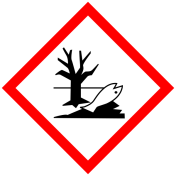
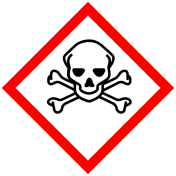
Physical Hazards
Physical Hazards
Physical Hazards
Physical Hazards
Physical Hazards
Health and Environmental Hazards
Health and Environmental Hazards
Health and Environmental Hazards
Health and Environmental Hazards
 NFPA 704
The National Fire Protection Association (NFPA) 704 “hazard diamond” is a standard system to aid emergency responders with the identification of hazards associated with materials stored at fixed facilities. These are posted at exterior, and sometimes interior, entrances and may also appear as labels on containers.
Each colored diamond represents a different hazard type. Numbers from 0 to 4 in each diamond show the level of the hazard. The higher the number, the higher the risk of harm. See detailed descriptions below.
Source: https://docinfofiles.nfpa.org/files/AboutTheCodes/704/NFPA704_HC2012_QCard.pdf
Select a color for more information
REDFire Hazard (Flammability)
Flash Point below 73°F (23°C); Highly Flammable; Rapidly vaporizes under normal conditions
Flash Point below 100°F (38°C); Flammable
Flash Point below 200°F (93°C); Requires moderate heating or high ambient temperatures to burn
Flash Point above 200° F (93°C); Requires considerable preheating to burn
Will not burn under normal conditions
BLUEHealth Hazard
Any exposure can kill
Even short exposure can cause serious injury and permanent damage
Continued exposure can cause temporary incapacitation or inflict an injury
Can cause irritation or inflict a minor injury
Not normally harmful
YELLOWReactivity (Instability)
May detonate
Explodes when triggered by either high heat, severe shock, or water
Reacts violently to either high heat, high pressure, or water
Can become unstable under high heat or high pressure
Stable when exposed to heat, pressure, or water
WHITEFire Hazard (Flammability)
Oxidizer; Allows other chemicals to burn without an air supply
Simple Asphysxiant
Reacts violently with water
Radioactive
Poisonous
Biological Hazard
Reacts violently with water
Corrosive; Strong acid or alkaline (base)
Strong Alkaline (Base)
Cryogenic